The short answer
The Brother HC1850 had the top silk running-stitch score in TechGearLab’s lab charts, the Singer Quantum Stylist 9960 tied for the top silk buttonhole score in the same tests, and the Brother 1034D serger is the pick for rolled hems on scarves and chiffon edges.
Our verdict
Top Picks
Silk slides, frays and shows every pucker, and the forum threads that rank for this search spend more time on features and set-up than on brands. This guide compares seven machines on Amazon for silk and similar slippery fabrics, from budget computerized models to a straight-stitch specialist and a serger for rolled hems. For each one it gives the silk-relevant features the maker lists (feed system, presser-foot pressure, speed control, stitch length and included feet) and says whether an independent test, an owner or only the maker covers silk.
Finder
Find a machine for your silk projects
Pick what you will sew most and a price tier. The suggestion is our editorial starting point, drawn from the seven machines below, not a test result.
Price tier legend: $ = entry level, $$ = mid-range, $$$ = premium, relative to the machines in this guide.
Compare the picks
Compare the sewing machines for silk
Each row is the listing the review links. “Feed” is the walking foot or even feed foot the maker lists in the box, or the serger’s differential feed; “Foot pressure” is whether the maker lists an adjustable presser-foot pressure. Speeds and weights are the maker’s figures (Brother’s “unit weight”); TechGearLab’s measured weights, given in each review, differ by up to 2.7 lb.
 HC1850Flattest Silk SeamsSilk, satin, garmentsComputerizedNo walking foot$299.99 Prime
Evidence: TechGearLab, this exact model
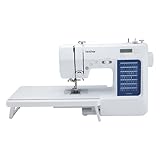 CS7000XWalking Foot in the BoxSilk, chiffon, garmentsComputerizedWalking foot included$279.97 Prime
Evidence: TechGearLab, this exact model
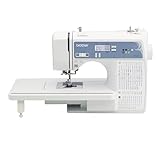 XR9550Budget Silk SeamsSilk, basting, garmentsComputerizedNo walking foot$229.99 Prime
Evidence: TechGearLab, this exact model
 Quantum Stylist 9960Silk Buttonholes and HemsButtonholes, blind hems, silkComputerizedWalking foot included$546.99 Prime
Evidence: TechGearLab, this exact model
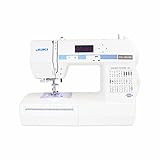 HZL-LB5100Chiffon and SheersChiffon, sheers, buttonholesComputerizedWalking foot optional$599.00
Evidence: TechGearLab, this exact model
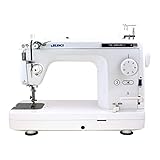 TL-2010QStraight-Stitch SpecialistStraight seams, french seams, georgetteStraight stitch onlyEven feed foot included$1,239.00
Evidence: owner reports, no independent test
 1034D sergerRolled Hems and EdgesRolled hems, seam finishing, chiffonSergerDifferential feed$269.99 Prime
Evidence: owner reports, no independent test
How the Silk Picks Were Chosen
How this guide was built
built from manufacturer documentation, published third-party reviews and owner reports; we have not tested these products ourselves.
What decided the picks
- Silk evidence: an independent test that sewed silk or chiffon on that exact model, or a named owner who sews silk, chiffon or georgette on it. Where neither exists, the review says the claim rests on the maker.
- Feed: a walking foot, even feed foot or differential feed in the box, per the maker, because slippery layers shift.
- Presser-foot pressure: whether the maker lists an adjustment, which PatternReview sewists raise for light, slippery fabric.
- Speed control and stitch length: a speed limiter or slow mode, and the stitch-length range, since silk sewists shorten stitches.
- Machine type and basics: mechanical, computerized, straight stitch or serger, plus built-in stitches, buttonholes, the automatic threader and weight, from the maker.
- Availability: in stock and new on Amazon when we checked on 15 November 2026, with the seller named where it held steady.
Where the evidence comes from and what silk sewists say matters more than the machine
Where the evidence comes from
Specs come from Brother, Singer, Juki and the linked Amazon listings. The only side-by-side silk figures we found are TechGearLab’s charts: it sewed six stitch patterns on satin, silk, cotton jersey and chiffon, scored a basic running stitch on each out of 10, and scored buttonholes on cotton muslin, silk and cotton jersey. Five of our seven picks are in those charts; where this guide compares them it says “of the five TechGearLab scored”. Wirecutter sewed silk in its tests too, but published no silk scores for these models. The Juki TL-2010Q and the Brother 1034D serger are in neither chart; their reviews rest on owner reports and maker specs, and say so.
What silk sewists say matters more than the machine
Several forum sewists say set-up matters at least as much as the machine. In a Threads magazine forum thread from a reader buying a machine “for the sole purpose of sewing on silk fabric”, one member says “The more important than the actual sewing machine is the needle and the thread” and that you need “a single hole throat plate rather than the ubiquious zigzag plate that comes on all machines.” The original poster replied that “the Kenmore, Janome, Sears multiple stitch machines with the zigzag foot encouraged puckering.” Not everyone agrees on the plate: another member says “I don’t use a straight stitch plate and have never had a problem even with silk chiffon,” starting on tissue paper with “a new sharp 65 or 70 needle.” A third recommends “a machine which has a walking foot.”
The 2026 r/sewhelp thread on delicate fabrics adds two feed systems. One poster who says “I sew a lot of delicate silks” credits Pfaff’s built-in IDT (integrated dual feed) for “perfect stitching without pulling”, and another says “Bernina’s have a dual feed, making it easier to handle slippery silks and velvets.” A third reply says “A straight stitch needle plate will help with a lot of the jamming no matter the machine.” On PatternReview, a member lists “a single hole stitch plate and adjustable foot pressure” as what they “would look for in sewing very light weight, slippery fabric”, and the original poster says their Janome Magnolia’s presser foot “exerts way too much pressure on my light fabric that it won’t move the fabric forward when sewing.”
Detailed Reviews
Brother HC1850, Flattest Silk Seams
Garment sewers on a budget who mostly sew straight seams in silk, satin and lining fabrics.
$299.99 from AmazonAs of Nov 18, 17:50 UTCVerdict
An entry-level computerized Brother with the top silk running-stitch score of the five TechGearLab scored, but weak silk buttonholes (4 of 10) and no walking foot.
Evidence: Independently reviewed, exact model. TechGearLab: HC1850.
The HC1850 has 185 built-in stitches, including 55 alphanumeric and eight one-step buttonhole styles, an automatic threading system, adjustable sewing speed and a wide table, per Brother. In TechGearLab’s review, “On some difficult fabrics to work with, like silk and chiffon, this model produced running and basting stitches that didn’t bunch the fabric at all, leaving the surface perfectly flat.” Its roundup chart gives the HC1850’s running stitch 9 of 10 on silk and 9 on satin, the only 9 on silk in the chart, though chiffon scored 7.
The limits show at the edges. TechGearLab found “minor tension issues” on a scallop stitch in chiffon that “can be easily changed in the settings”, and on buttonholes it says the HC1850 “made a slightly better buttonhole in silk, but it still wasn’t very pretty”, scoring 4 of 10 on silk. Like the other Brothers it tested, “this model tends to skip a bit right at the beginning of the buttonhole”. Brother lists no adjustable presser-foot pressure, and its feet list has no walking foot. Against the CS7000X, it trades the walking foot for a higher silk score and more stitches.
Specs (linked: HC1850, machine only)
- Type: computerized, LCD
- Stitches: 185, with 8 one-step buttonholes (Brother)
- Max speed: 850 stitches per minute, adjustable speed (Brother)
- Stitch length: up to 5 mm (Brother)
- Presser-foot pressure: not adjustable (Brother)
- Feed: feed dogs; no walking foot in Brother’s feet list
- Included feet: buttonhole, overcasting, monogramming, zipper, zigzag, blindstitch, button fitting, spring-action quilting (Brother)
- Needle threader: automatic (Brother)
- Weight: 13.2 lb (Brother; TechGearLab measured 10.5 lb)
Pros
- Flat running and basting stitches on silk and chiffon in TechGearLab’s test, with 9 of 10 on silk
- 185 stitches including lettering and eight buttonhole styles, per Brother
- Sold by Amazon.com when we checked on 15 November 2026
Cons
- Silk buttonholes scored 4 of 10 and “wasn’t very pretty”, per TechGearLab
- No adjustable presser-foot pressure or walking foot, per Brother
Who should buy it
Garment sewers on a budget who mostly sew straight seams in silk, satin and lining fabrics.
Brother CS7000X, Walking Foot in the Box
Beginners who want a walking foot for slippery silk layers without buying one separately.
$279.97 from AmazonAs of Nov 18, 17:52 UTCVerdict
An entry-level Brother that ships with a walking foot, scoring 8 of 10 on both silk and chiffon in TechGearLab’s charts, with weak silk buttonholes.
Evidence: Independently reviewed, exact model. TechGearLab: CS7000X.
The CS7000X has 70 built-in stitches, an automatic needle threader, adjustable sewing speed control and ten feet, and Brother’s carton list includes a walking foot. Wirecutter, which made it its top pick for most beginners, notes “it includes a wide table extension and a walking foot, which are rarities on a machine in this price range,” and that a walking foot helps “when you’re working with fabrics that may stretch or shift while moving through the machine.” In TechGearLab’s review, “Sewing the most basic stitches, like a running stitch and basting stitch, the CS7000X did well across all fabrics,” and in its quilting test it produced “the same stitch results” through quilt layers “as it did through double layers of silk, satin, and cotton jersey.”
On silk buttonholes, though, “This machine struggled to create attractive buttonholes on cotton jersey and silk, leaving uneven stitches and large gaps around the edges”, with a silk score of 2 of 10. On zigzag stitches and blind hems, TechGearLab says “some minor tweaks in the top thread’s tension make for better stitches.” Brother lists no adjustable presser-foot pressure. Against the HC1850, it gives up 115 stitches and one point on the silk running-stitch score for the walking foot and a higher chiffon score (8 against 7).
Specs (linked: CS7000X, machine only)
- Type: computerized, LCD
- Stitches: 70, with 7 one-step buttonholes (Brother; TechGearLab)
- Max speed: 750 stitches per minute, adjustable speed control (Brother)
- Stitch length: up to 5 mm (Brother)
- Presser-foot pressure: not adjustable (Brother)
- Feed: walking foot included (Brother)
- Included feet: zigzag, buttonhole, zipper, button sewing, overcasting, blind stitch, monogramming, walking, quilting and 1/4-inch, plus a quilt guide (Brother)
- Needle threader: automatic (Brother)
- Weight: 10.5 lb (Brother)
Pros
- Walking foot in the box for silk layers that shift, per Brother and Wirecutter
- Running stitch 8 of 10 on silk and chiffon in TechGearLab’s charts
- Sold by Amazon.com when we checked on 15 November 2026
Cons
- Silk buttonholes scored 2 of 10, with “large gaps around the edges”, per TechGearLab
- No adjustable presser-foot pressure, per Brother
Who should buy it
Beginners who want a walking foot for slippery silk layers without buying one separately.
Brother XR9550, Budget Silk Seams
Budget sewers who want a computerized machine for silk seams and can keep buttonholes small.
$229.99 from AmazonAs of Nov 18, 17:48 UTCVerdict
The least expensive pick when we checked on 15 November 2026, with an 8 of 10 silk running stitch in TechGearLab’s chart, but buttonholes that went wrong on silk at the largest size.
Evidence: Independently reviewed, exact model. TechGearLab: XR9550.
The XR9550 has 165 built-in stitches, including eight one-step buttonhole styles and 55 alphanumeric, plus eight feet, a hard case and a wide table, per Brother. Brother’s feet list has no walking foot, and its page does not state the presser-foot pressure. In TechGearLab’s review, “Basting on the XR9550 was a breeze. On each of the fabrics, the stitches were evenly spaced, and the tension was terrific, with very little bunching, even on chiffon.” A photo caption notes “some very slight bunching on chiffon fabric”, and the chart gives it 8 of 10 on silk and 7 on chiffon.
Buttonholes are its weak spot on silk. TechGearLab found “Buttonholes on silk were another story, though. The tension became much tighter with the stitching closer at the top and slightly farther apart at the bottom.” That happened on the largest buttonhole setting, and “The XR9550 did just fine with smaller buttons on silk, which is what you’d probably use for that fabric anyway.” The chart still scores its silk buttonholes 2 of 10. Against the CS7000X it shares the silk score and adds 95 stitches, but has no walking foot in the box.
Specs (linked: XR9550, machine only)
- Type: computerized, LCD
- Stitches: 165, with 8 one-step buttonholes (Brother)
- Max speed: 850 stitches per minute (maker figure listed by TechGearLab)
- Stitch length: up to 5 mm (TechGearLab spec table)
- Presser-foot pressure: not published (Brother)
- Feed: feed dogs; no walking foot in Brother’s feet list
- Included feet: buttonhole, blind hem, zipper, overcasting, monogramming, zigzag, spring-action quilting, button sewing (Brother)
- Needle threader: advanced needle threading system (Brother)
- Weight: 10.1 lb (Brother; TechGearLab measured 12.1 lb)
Pros
- Even, well-tensioned straight and basting stitches with “very little bunching, even on chiffon”, per TechGearLab
- 165 stitches, a hard case and a wide table, per Brother
- Sold by Amazon.com when we checked on 15 November 2026
Cons
- Silk buttonholes scored 2 of 10 in TechGearLab’s chart, and came out uneven at the largest setting
- No walking foot in Brother’s feet list
Who should buy it
Budget sewers who want a computerized machine for silk seams and can keep buttonholes small.
Singer Quantum Stylist 9960, Silk Buttonholes and Hems
Garment sewers who put buttonholes and blind hems in silk blouses and dresses.
$546.99 from AmazonAs of Nov 18, 09:45 UTCVerdict
A 600-stitch computerized Singer that tied for the top silk buttonhole score and topped the blind-hem test in TechGearLab’s roundup, with a walking foot and speed control, but it “sometimes really struggled with chiffon.”
Evidence: Independently reviewed, exact model. TechGearLab: Quantum Stylist 9960.
Singer lists 600 stitches, 13 one-step buttonhole styles, a built-in needle threader, 25 needle positions and a mechanical speed control that sets the maximum speed, which Singer pitches for “slower for more intricate projects”. Its included accessories list an even feed/walking foot, and Wirecutter counts “13 presser feet (one of them the coveted walking foot)”. In TechGearLab’s buttonhole chart it scored 9 of 10 on silk, the joint top score with the Singer 4452 Heavy Duty, which is not a pick here. The roundup calls the 9960 “the top-rated machines at making buttonholes”, and its review says it “scored highest of all the sewing machines at the blind hem” and “did a great job even on harder to sew slick fabrics like silk and chiffon.”
The running stitch is less impressive: 7 of 10 on silk in the chart, and the roundup says it “performed quite well on fabrics like a stretch cotton jersey — though it sometimes really struggled with chiffon.” The roundup’s tester adds, “I did have some problems with the default tension settings and had to make some tweaks to get it just right.” Against the HC1850, it trades two points on the silk running stitch for far better silk buttonholes, a walking foot and a speed limiter.
Specs (linked: Quantum Stylist 9960 with hard case and extension table)
- Type: computerized
- Stitches: 600, with 13 one-step buttonholes (Singer)
- Max speed: 850 stitches per minute, with a speed control that sets the maximum (Singer)
- Stitch length: up to 5 mm (TechGearLab spec table)
- Presser-foot pressure: not published (Singer)
- Feed: even feed/walking foot included (Singer)
- Needle threader: built in (Singer)
- Weight: 18.2 lb (Singer; TechGearLab measured 19.7 lb)
Pros
- Silk buttonholes scored 9 of 10, the joint top score in TechGearLab’s chart
- Top blind-hem score overall, and “a great job” on silk and chiffon, per TechGearLab
- Speed control and a walking foot, per Singer; sold by Amazon.com when we checked on 15 November 2026
Cons
- Running stitch 7 of 10 on silk, and it “sometimes really struggled with chiffon”, per TechGearLab
- Default tension needed tweaks in TechGearLab’s testing
Who should buy it
Garment sewers who put buttonholes and blind hems in silk blouses and dresses.
Juki HZL-LB5100, Chiffon and Sheers
Experienced sewists making chiffon pieces who are happy to fine-tune tension.
$599.00 from AmazonAs of Nov 18, 11:45 UTCVerdict
A compact computerized Juki that scored 10 of 10 on chiffon in TechGearLab’s chart and has a super-slow mode, but dropped stitches often enough that TechGearLab would not recommend it to a beginner.
Evidence: Independently reviewed, exact model. TechGearLab: HZL-LB5100.
Juki lists 100 stitches, a 1-step buttonhole, an automatic needle threader, a “7-Point Feed Dog”, a “Precise Stop” button that switches “to super-slow speed” and a top speed of 700 stitches per minute; its walking foot is an optional accessory, not in the box. TechGearLab’s roundup says it “performed wonderfully on delicate chiffon fabric”, scoring chiffon 10, satin 9 and silk 7. Its review adds that “on silk and cotton muslin, the resulting buttonholes are consistent and functional”, 7 of 10 on silk in the chart.
The catch is fussiness. TechGearLab writes: “While the HZL-LB5100 persistently made stitches of even sizes and spacing, it’s not without its faults. During our testing, this machine dropped stitches with regularity.” It adds that it needed “so much additional finagling” that “we wouldn’t recommend this model to a beginner”, and that “Using default settings, we had several dropped stitches in our satin tests.” Juki’s page does not list an adjustable presser-foot pressure. The listing was sold by a third-party seller, not Amazon, when we checked on 15 November 2026, and showed limited stock.
Specs (linked: HZL-LB5100)
- Type: computerized, LCD
- Stitches: 100, with 1-step buttonholes (Juki; TechGearLab counts 3 styles)
- Max speed: 700 stitches per minute, with a super-slow mode (Juki)
- Stitch length: up to 5 mm (Juki)
- Presser-foot pressure: not published (Juki)
- Feed: 7-point feed dog; walking foot optional, sold separately (Juki)
- Needle threader: automatic (Juki)
- Weight: 12.3 lb (Juki)
Pros
- Chiffon 10 of 10, the joint top chiffon score in TechGearLab’s chart
- A super-slow mode for precise stops, per Juki
- Silk buttonholes “consistent and functional”, per TechGearLab
Cons
- Dropped stitches “with regularity”; tension changes helped only after “so much additional finagling”, per TechGearLab
- Sold by a third-party seller with limited stock when we checked on 15 November 2026
Who should buy it
Experienced sewists making chiffon pieces who are happy to fine-tune tension.
Juki TL-2010Q, Straight-Stitch Specialist
Experienced sewists who already own a zigzag machine and want a fast straight-stitch machine for French seams; no independent silk test was found for it.
$1,239.00 from AmazonAs of Nov 18, 18:20 UTCVerdict
A semi-professional straight-stitch-only Juki with adjustable presser-foot pressure, a 200 to 1,500 stitches-per-minute speed range and an even feed foot Juki pitches for georgette, but no zigzag or buttonholes.
Evidence: No independent test; owner reports. r/SewingMachinePorn, Anyone using the Juki TL-2010Q?: TL-2010Q.
Juki lists a single-needle lockstitch machine, “Straight Stitch Only”, with a speed control lever from “200 to 1500 stitches per minute”, presser-foot pressure that “can be adjusted according to the fabric being sewn”, a knee lifter, an automatic needle threader, a thread trimmer and an even feed foot that “ensures the machine’s ability to produce beautiful seams when sewing difficult-to-feed fabrics such as georgette and velvets”. The dealer Rocky Mountain Sewing, which sells it, says the even-feed foot and adjustable pressure “handle everything from slippery georgette to heavy leather”.
No independent test of it on silk turned up in our searches; owners mostly use it for quilting. In an r/SewingMachinePorn thread, one owner of nearly six years says its stitches are “only straight, which is great for quilting and apparel (I like French seams)”, while another “had to adjust the tension myself when I first got it which felt like it took forever to get right.” In an r/SewingForBeginners thread, one reply warns it has “No zig zag, no stretch stitch, no blanket stitch, no buttonholes.” When we checked on 15 November 2026, the listing was sold by third-party sellers, not Amazon, and the seller changed between our checks.
Specs (linked: TL-2010Q)
- Type: straight stitch only, single-needle lockstitch (Juki)
- Stitches: straight stitch only, so no zigzag or buttonholes (Juki)
- Max speed: 1,500 stitches per minute, adjustable from 200 (Juki)
- Stitch length: up to 6 mm (Juki)
- Presser-foot pressure: adjustable (Juki)
- Feed: even feed foot included (Juki)
- Needle threader: automatic (Juki)
- Weight: 25.4 lb (Juki)
Pros
- Adjustable presser-foot pressure and an even feed foot Juki pitches for georgette, per Juki
- Speed control from 200 stitches per minute, per Juki
- An owner uses it for apparel and French seams
Cons
- Straight stitch only: no zigzag, no buttonholes, per Juki and owners
- Sold by third-party sellers, not Amazon, with the seller changing between our checks on 15 November 2026
Who should buy it
Experienced sewists who already own a zigzag machine and want a fast straight-stitch machine for French seams; no independent silk test was found for it.
Brother 1034D, Rolled Hems and Edges
Sewists who make chiffon scarves or want narrow rolled hems and clean seam edges, and will practise the settings on scraps first.
$269.99 from AmazonAs of Nov 18, 11:35 UTCVerdict
A 3- or 4-thread Brother serger with a rolled-hem setting, differential feed and adjustable foot pressure that one owner uses on chiffon scarf edges after a lot of practice.
Evidence: No independent test; owner reports. Becka Rahn (owner blog): 1034D.
Brother lists 4-thread and 3-thread overlock, narrow hem, rolled hem and ribbon lock stitches, “Differential fabric feed for better stitch quality”, adjustable presser-foot pressure, a stitch width from 3 to 7 mm and up to 1,300 stitches per minute, and pitches it for edges on “formal wear, linens and stretchy fabrics”. A serger trims and wraps the raw edge as it sews, and as the review site sewing-machine-reviews.com puts it, “It does not replace your sewing machine, it works alongside it.” The owner of The Silk Thread writes that “when it comes to sewing fine silk, the serger is a life saver!”, though their machine is the 1034DX, which they call “the follow up model to the very popular 1034D.”
For the exact model, Becka Rahn writes, “I have a Brother 1034D serger,” and uses its 3-thread rolled hem on chiffon scarves with “a 60/8 microtex needle”. They are honest about the learning curve: “It took me many many many many yards of experiments to figure out what those settings are,” and “Chiffon is very prone to wiggle and skew.” On PatternReview, one 1034D owner trying “chiffon or light weight silk on this serger” says “I have not had any luck,” and a reply shares settings used for “a rolled hem with Georgette on this model machine”. We found no independent test of it on silk or chiffon; the affiliate review site sewing-machine-reviews.com praises its “ability to thread easily and work on the most delicate fabrics”, but its review page describes no test method.
Specs (linked: 1034D)
- Type: serger, 3 or 4 threads, 2 needles (Brother)
- Stitches: 4-thread and 3-thread overlock, narrow hem, rolled hem, ribbon lock (Brother)
- Max speed: 1,300 stitches per minute (Brother)
- Stitch width: 3 to 7 mm (Brother)
- Presser-foot pressure: adjustable (Brother)
- Feed: differential feed (Brother)
- Included feet: standard, blindstitch, gathering (Brother)
- Weight: 13.45 lb (Brother)
Pros
- Rolled-hem setting and differential feed, per Brother
- An owner hems chiffon scarves on this exact model
- Sold by Amazon.com when we checked on 15 November 2026
Cons
- Rolled-hem settings on chiffon took one owner “many many many many yards of experiments”
- A serger finishes edges and seams; it does not replace a sewing machine
Who should buy it
Sewists who make chiffon scarves or want narrow rolled hems and clean seam edges, and will practise the settings on scraps first.
Setting Up Any Machine for Silk
Whichever machine you choose, the same set-up points come up again and again in the forum threads above.
Needle plate and fabric being pulled in
A zigzag needle plate has a wide hole, and fine silk can be pushed down into it at the start of a seam. One r/sewhelp owner who sews “chiffon/organza/delicate silks/sequins” on a 1940s straight-stitch Singer says “the smaller opening in the needle plate keeps delicates from getting sucked down into the bobbin.” A long-time owner of a Janome HD-3000, writing at The Craft Blogger, says “very thin fabrics can get sucked down into the machine at the beginning and end of a seam because the hole the needle goes into needs to be wide enough to accommodate a zig zag stitch,” and solves it with “a tiny bit of paper”. Check whether your machine’s maker sells a straight-stitch plate for it. The Juki TL-2010Q sews only a straight stitch.
Needles and thread
The Threads forum advice is consistent: one member says “if sewing a fine silk like charmuse or china silk you need a small – sz 60 needle, sharp” and “use a 60 weight thread”, and another says “You want to use ‘sharps’ in the smallest/finest number possible (#9).” The 1034D owner above uses a 60/8 microtex needle on chiffon. The same member says to check needles “often for burrs and bending as these will snag your fabric and ruin it!”
Feed and presser-foot pressure
Slippery layers can shift as they feed; Wirecutter says a walking foot is helpful with fabrics that “may stretch or shift while moving through the machine.” A walking foot in the box (CS7000X, Singer 9960; optional on the Juki LB5100), an even feed foot (TL-2010Q) or a built-in dual feed (Pfaff’s IDT, Bernina’s dual feed, recommended by owners in the r/sewhelp thread above) addresses that. Adjustable presser-foot pressure lets you lighten the grip on sheer fabric; of our picks, only the Juki TL-2010Q and the Brother 1034D list it, and Brother states “No” for the HC1850 and CS7000X. Wirecutter describes Pfaff’s IDT on the Select 4.2 as helping “whether it’s slippery silk or a thick stack of heavy fabric”; we found no Amazon US listing for that machine, so it is not a pick.
Speed and stitch length
Go slowly: Becka Rahn’s “best tip” for chiffon on the serger is to be “smooth and steady”. One Threads member tells silk sewists “to shorten your stitch length to a 2 instead of the standard 2.5 that many machines default to.” Check the stitch-length control before you buy. For speed, the Singer 9960 has a limiter that sets the top speed, the Juki LB5100 a super-slow mode and the TL-2010Q a lever from 200 stitches per minute. If you want speed set by a slider instead of a pedal, see our guide to machines without a foot pedal.
Seams, hems and edges
Silk frays, so finish every edge. French seams need only a straight stitch. Narrow rolled hems on scarves are a serger job: in the Threads thread, one member “would have thought that an overlocker wih a baby rolled hem was needed” for edging scarves, and on PatternReview a sewist who “wanted a serger to make nice rolled hems on chiffon” chose one. Test every setting on a scrap of the same silk first.
Which Machine for Which Silk Project
- Silk clothes (blouses, dresses, linings): the Singer 9960 for its silk buttonholes and blind hems, or the HC1850 if most seams are straight and buttonholes are few. For a wider choice of fabrics, see our guide to machines for light and heavy fabrics.
- Chiffon, georgette and organza: the Juki LB5100 had the top chiffon score of our picks in TechGearLab’s chart; add the 1034D for rolled edges.
- Charmeuse and slippery satin: a walking foot helps, so the CS7000X or 9960; the HC1850 and LB5100 both scored 9 on satin in TechGearLab’s chart.
- Juki or Bernina? Both brands come up in silk forums. A PatternReview member who owns a Juki F-series machine says “I haven’t found any fabric that my Juki F series has serious problems with, silk chiffon to 1000D coated Cordura,” and an owner in the r/sewhelp thread praises Bernina’s dual feed (our light-and-heavy guide reviews the Juki HZL-F600). Bernina’s sewing machines weren’t in our Amazon checks; see our vintage Bernina guide and our used sewing machine guide if you would rather buy one second-hand.
- Brother CS7000X or Janome HD3000? Both appear in searches next to silk. The CS7000X is reviewed above; the HD3000, a mechanical machine, is covered in our light-and-heavy guide. For more machines across every price, see the sewing machines hub and our best quality sewing machines.
Frequently Asked Questions
Q. What is the best sewing machine for sewing silk fabrics?
Of the five machines TechGearLab scored that are picks here, the Brother HC1850 had the top silk running-stitch score (9 of 10), and the Singer 9960 tied for the top silk buttonhole score (9 of 10). Forum sewists say features matter more than the brand: a single-hole needle plate, adjustable presser-foot pressure and a walking or dual feed.
Q. Is silk a difficult fabric to sew?
Some silks more than others. The owner of The Silk Thread found raw silk “a pleasure to sew and could be worked very much like cotton”, while “traditional China silk” was “The real challenge” and “Silk charmeuse is slippery!” Fine, slippery silks need small sharp needles, short stitches and slow sewing.
Q. What is the best type of sewing machine needle for sewing silk?
A fine sharp or microtex needle. Threads forum members recommend “a small – sz 60 needle, sharp” for charmeuse or China silk and “a new sharp 65 or 70 needle” for chiffon, and the 1034D owner above uses a 60/8 microtex needle on a serger.
Q. What is the best way to sew silk?
Start on tissue paper, use a fresh fine needle and fine thread, shorten the stitch, lighten the presser-foot pressure if your machine allows, sew slowly and finish edges with French seams or a rolled hem. Test on a scrap of the same silk first.
The bottom line
Final Verdict
For flat silk seams on a budget, choose the Brother HC1850 (check price); for a walking foot in the box, the Brother CS7000X (check price); and for the least expensive pick, the Brother XR9550 (check price), all sold by Amazon.com when we checked on 15 November 2026. For silk buttonholes and blind hems, the Singer Quantum Stylist 9960 (check price) is the pick. Chiffon specialists can try the Juki HZL-LB5100 (check price), and straight-seam purists the Juki TL-2010Q (check price); both were sold by third-party sellers, not Amazon, when we checked on 15 November 2026 (the LB5100 with limited stock). Add the Brother 1034D (check price) serger, sold by Amazon.com on the same date, for rolled hems.
Product prices and availability are accurate as of the date/time indicated and are subject to change. Any price and availability information displayed on Amazon.com at the time of purchase will apply to the purchase of this product.